Communities
Discover & Explore

- Joliet
- Elwood
- Wilmington
- Braidwood
- Godley
Each community located along the Red Carpet Corridor boasts a collection of iconic Route 66 attractions — as well as a history of unforgettable events and characters. Learn more about the communities of the Red Carpet Corridor and the stops, shops, and photo ops along the way.
Joliet
The third-largest city in Illinois, Joliet is situated along the original 1926 alignment of Historic Route 66. In recent years, the city has attracted numerous businesses to develop downtown buildings around the historic Rialto Theatre, dubbed the “Jewel of Joliet.”
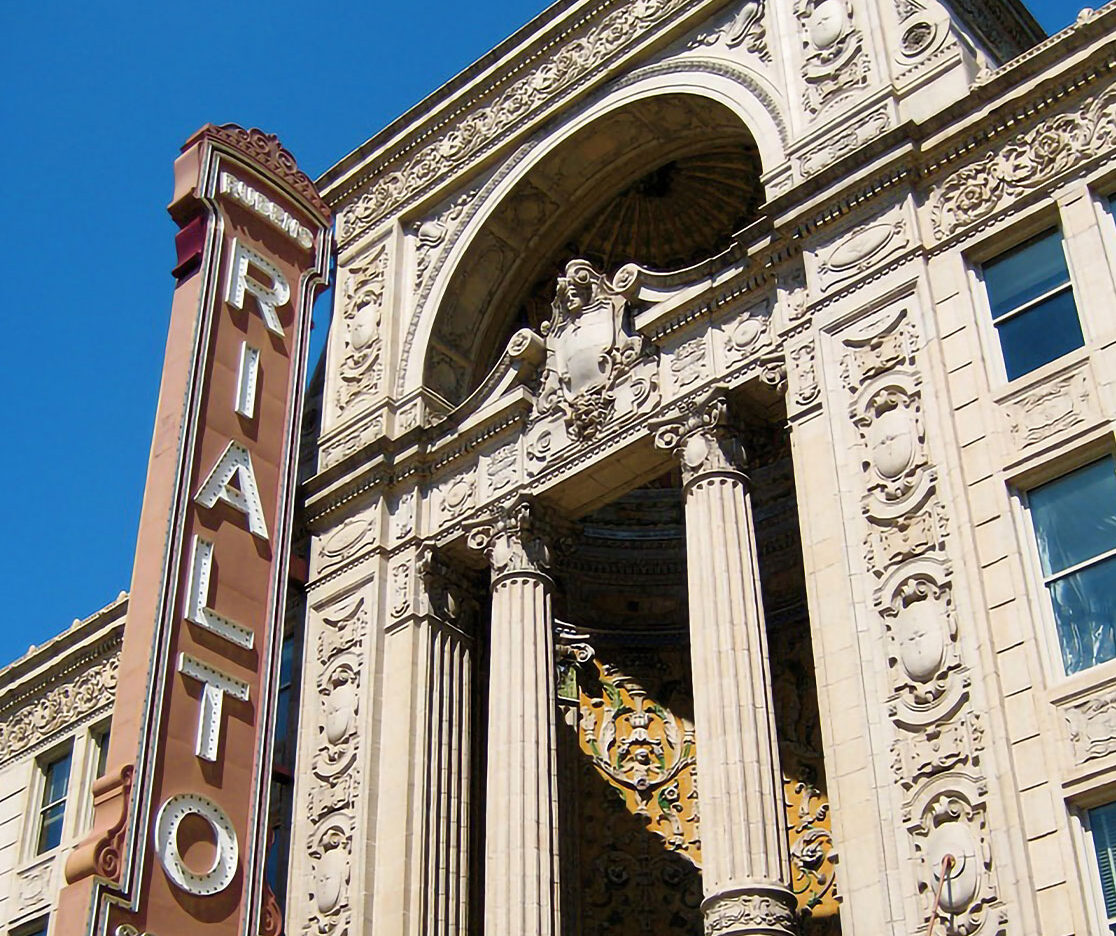
Rialto Theatre

- Billie Limacher Bicentennial Park
- Illinois Rock & Roll Museum on Route 66
- Joliet Area Historical Museum and Route 66 Welcome Center
- Joliet Railroad Museum
- Kicks on 66 Park
- Lambert 1957 Mobil & Convenience Store
- Martin & Emma Planinsek Grocery and Meat Market Museum
- Old Joliet Prison
- Rialto Square Theatre
- Rich & Creamy
- Route 66 Number & Shield Installment
Elwood
Incorporated in 1869 along the Joliet-Bloomington railroad, the rural community of Elwood was at one point home to the Joliet Arsenal, where a 1942 explosion claimed 42 lives. Today, the village is home to the Abraham Lincoln National Cemetery.
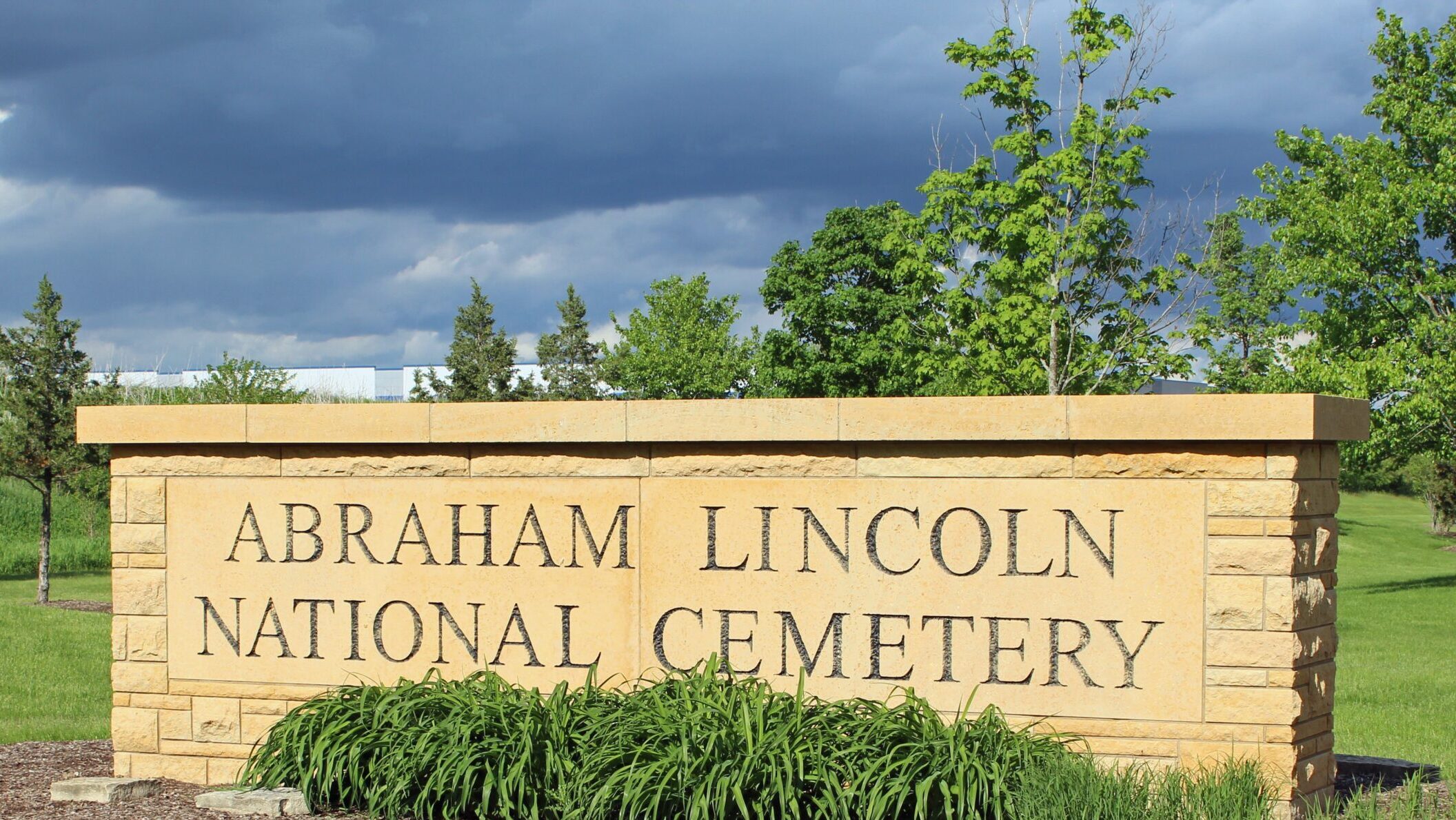
ABRAHAM LINCOLN
NATIONAL CEMETERY
- Abraham Lincoln National Cemetery
- Douglas Street Original Route 66 Pavement
- Workers Roadside Exhibit
Wilmington
Founded in 1836, the city of Wilmington was once home to numerous industries, including a sawmill, gristmill, and even a carding machine, all powered by the Kankakee River; the river is also home to a large island that splits the waters into two channels, giving the city the nickname “the Island City.” The Illinois and Michigan Canal — a 19th-century, 96-mile waterway connecting Lake Michigan to the Illinois River — passes through the city along with its 62.5-mile hiking and biking trail. Today, the city is located near the Midewin National Tallgrass Prairie, which is maintained by the U.S. Forest Service and is home to the state’s largest bison herd.
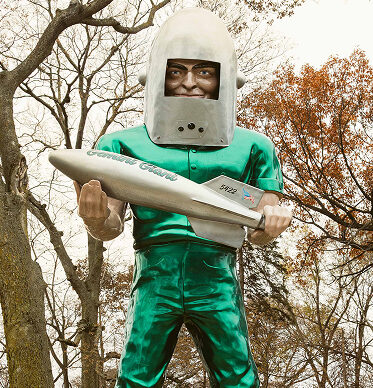
gemini giant
- Eagle Hotel
- Gemini Giant
- Historic Water Street Shopping District
- I&M Canal
- Landing Pad
- Mar Theatre
- Midewin National Tallgrass Prairie
- N&S Island Parks
- Route 66 Antiques
- Sinclair Dinosaur
- Wilmington Area Historical Society
Braidwood
A 19th-century mining boomtown, Braidwood was named for resident James Braidwood, an employee of a local company charged with superintending the sinking of the city’s first deep mine shaft. Numerous fossils have been discovered in Braidwood, many of which are on display at the Field Museum of Natural History in Chicago.
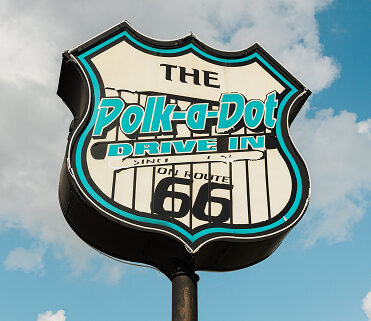
Polk-a-dot Drive-In
- Braidwood Zoo
- Polk-a-Dot Drive-In
Godley
Incorporated in 1888, Godley was another coal mining boomtown — a history that is honored at the Illinois Route 66 Mining Museum.
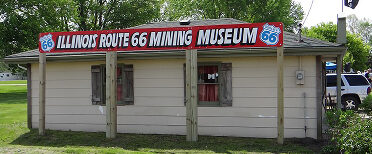
ILLINOIS RT 66 MINING MUSEUM
- Illinois Route 66 Mining Museum
Braceville
Founded under the original name of Sulphur Springs in 1834, the village changed its name to Braceville under the leadership of B.R. Dowd, who chose the name after his hometown of Braceville Township, OH. Braceville is located near Mazonia-Braidwood State Fish and Wildlife Area, where the state fossil of Illinois, the Tully Monster (Tullimonstrum gregarium) was discovered in 1957.
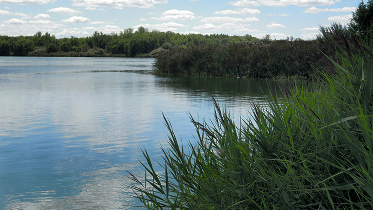
Mazonia-braidwood
state fish and wildlife area
- Illinois Route 66 Mining Museum
Gardner
Named after founder Henry C. Gardner, this small village is home to the famous Two-Cell Jail built in 1906 as well as the famous Streetcar Diner — both popular photo ops!
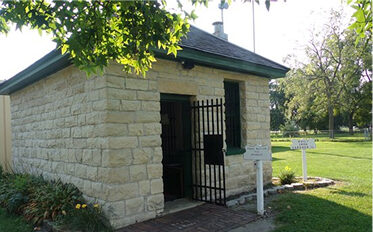
two-cell jail
- The Shop on Route 66
- Streetcar Diner
- Two-Cell Jail
Dwight
Laid out on Jan. 30, 1854, parcels of Dwight were split four ways between five men who all had ties to the railroad in some capacity. The C&A Railroad Depot, which was built in 1891, served as the village hall for many years; today, it’s home to the Dwight Historical Society and the Dwight Chamber of Commerce.
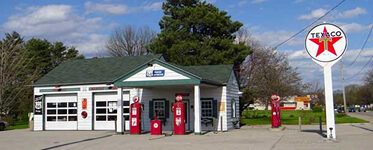
ambler’s texaco station
and route 66 visitor center
- Ambler’s Texaco Station and Route 66 Visitor Center
- Crazy 80’s Car Museum
- Frank L. Smith Bank
- Old Rute 66 Family Restaurant
Odell
The tiny village of Odell has always been defined by transit, beginning with the town’s founding by civil engineers who worked on the Chicago and Alton Railroad and later by Route 66. At one point, a pedestrian tunnel allowed churchgoers and schoolchildren to cross the Mother Road safely.
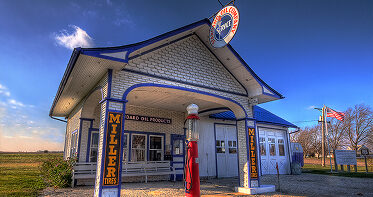
standard oil station
- Odell Subway Tunnel
- Standard Oil Station
Pontiac
Well known for its collection of museums and murals — as well as its expansive city parks — the city of Pontiac is one of the most popular stops for Route 66 travelers. In fact, the city’s parks were once home to the popular Chautauqua assemblies and are today connected by one of Pontiac’s trademark features: its pedestrian Swinging Bridges.
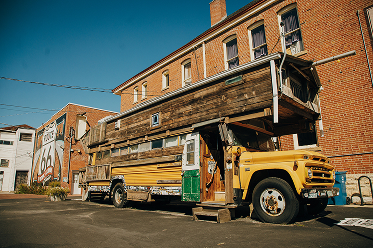
bob waldmire LAND YACHT
@ Pontiac MUSEUM COMPLEX
- 1875 Livingston County Courthouse
- Art Cars
- Eagle Performing Arts & Conference Center
- Humiston Woods Nature Center
- Murals on Main Street Tour
- Museum of the Gilding Arts
- Pontiac Museum Complex
- Pontiac-Oakland Automobile Museum & Resource Center
- Route 66 Shield Mural
- Swinging Bridges
Chenoa
Historians have long debated the unique name of this historic city; some hypothesize the name was derived from a Native American term referring to the Kentucky River. Remnants of the original Route 66 pavement can be seen south of town where the Mother Road intersects with US-24.
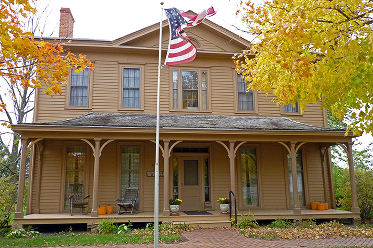
matthew T. Scott House
- 1926-30 Highway Segment
- Iron Cave Golf Simulator
- W. Lenny Shoe & Drug Store Mural
- Joe’s Station House Pizza
- Matthew T. Scott House
- OB’s Cervezaria
- Route 66 Fetch & Stretch Dog Park
- Route 66 Mural
Lexington
The small town of Lexington has been fortunate enough to have been visited by not one, but two U.S. presidents in its lifetime. Abraham Lincoln visited the city on many occasions — sometimes staying overnight — and then-President Theodore Roosevelt visited on July 15, 1902, when he was greeted by a crowd of 20,000 people.
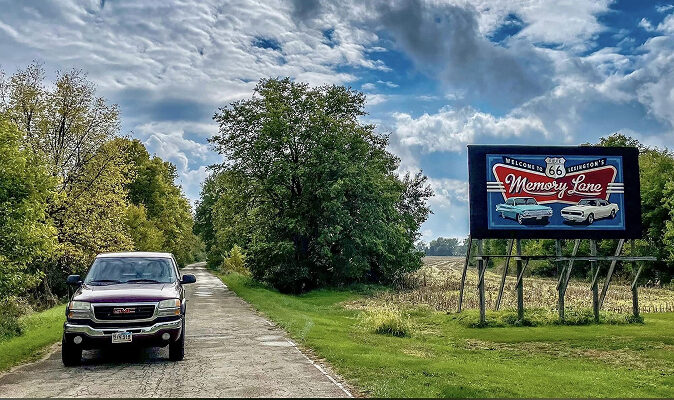
memory lane
- Memory Lane
- Patton Cabin
- Neon Sign
- American Standard Elephant
- American Eagle
Towanda
While many Midwestern cities of the time were centered around a town square, Towanda was laid out around the railroad with a diagonal main street running parallel to the rail. Today, visitors can walk an original stretch of the Mother Road at the Towanda Route 66 Parkway & Arboretum, which is home to numerous markers honoring Route 66 businesses throughout the years as well as numerous species of trees.
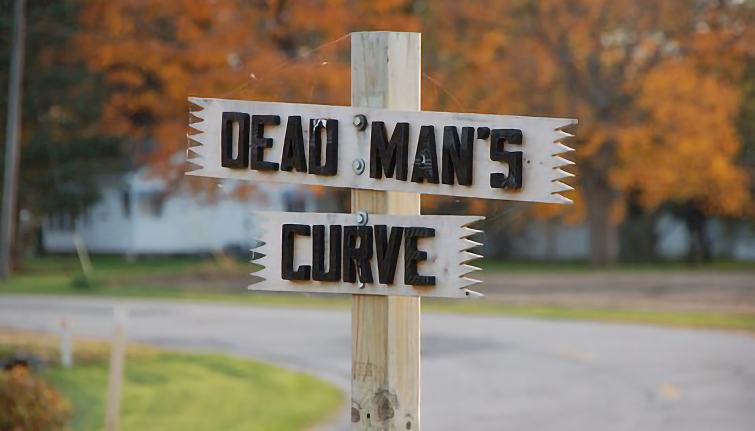
dead man’s curve
- Dead Man’s Curve
- Towanda Route 66 Parkway & Arboretum
Normal
Originally named North Bloomington when it was laid out in 1854, the town of Normal later derived its name from one of its most famous institutions, Illinois State Normal University — today known as Illinois State University. The town is home to numerous Route 66 attractions, including its rejuvenated Uptown district, home to specialty shops and boutiques, restaurants, and entertainment venues like the historic Normal Theater.
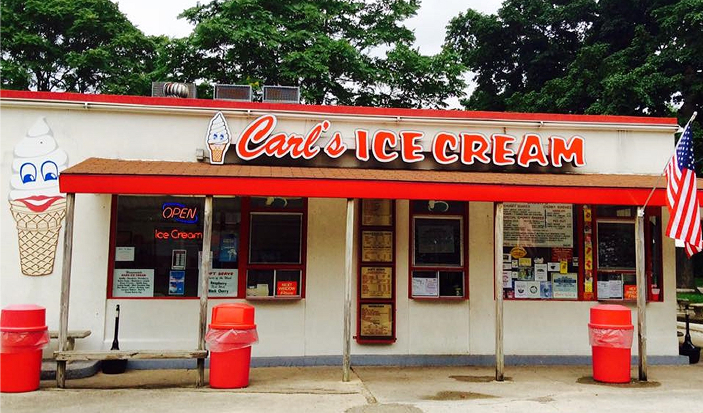
carl’s ice cream
- Carl’s Ice Cream
- Children’s Discovery Museum
- DESTIHL Restaurant and Brew Works
- Normal Theater
- Ryburn Place at Sprague’s Super Service
- Uptown Normal
Bloomington
The fifth-most populous city outside the Chicago metro area, Bloomington originated from a settlement called Keg Grove, later known as Blooming Grove. Abraham Lincoln spent a great deal of time in Bloomington during his legal career — perhaps more than any other Illinois city besides Springfield — and prominent resident Jesse W. Fell played a key role in encouraging Lincoln to run for president. Bloomington is also home to Miller Park Zoo, which is thought to be the only zoo with live animals on the entirety of the Mother Road.
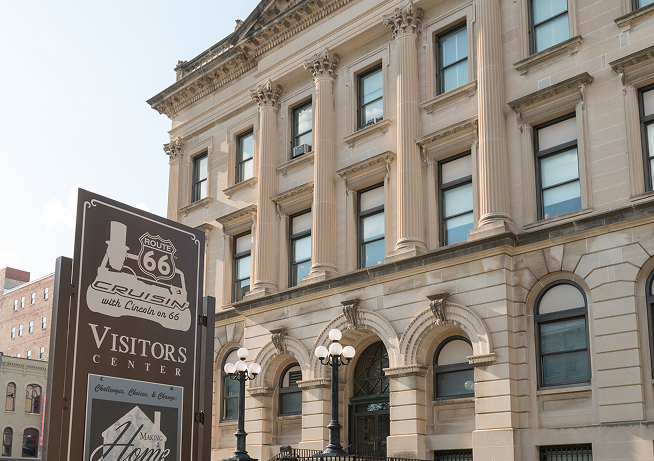
mclean county
museum of history
- Cruisin’ with Lincoln on 66 Visitors Center & Gift Shop
- David Davis Mansion Historic Site
- Evergreen Memorial Cemetery
- Grady’s Family Fun Park
- Grady’s Pizza
- McLean County Museum of History
- Miller Park
- Miller Park Zoo
- Red Raccoon Games
- Route 66 Art Trail
- Slow Art Day
- Wizard of Oz Dorothy Gage Monument